


Planning a low-key traditional wedding with limited funds can be a challenging experience due to the high market costs and the desire for a luxurious wedding.
Traditional marriage is a Nigerian tradition, irrespective of your tribe, and it is possible to plan a traditional wedding without breaking the bank, especially if there is a good understanding amongst the families.
The fact is, planning a low-budget wedding is not always about a lack of money, but may be a preference among couples to have a conservative ceremony with family and friends.
In this post, you will learn how to plan a beautiful, respectful, and affordable traditional marriage in Nigeria without unnecessary pressure.
How to Plan a Low-Budget Traditional Marriage
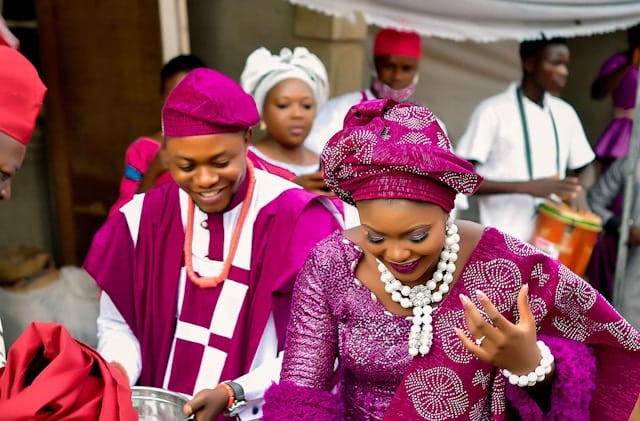
Here are practical steps to planning an economical traditional wedding in Nigeria;
- Understand the Cultural Requirements First
- Set a Realistic Budget
- Keep the Guest List Small
- Use a Family Home or Community Space
- Rent or Borrow Traditional Attire
- Simplify the Traditional Items List
- Choose Affordable Catering Options
- Cut Entertainment Costs
- Be Strategic With Photography & Videography
- Avoid Social Media Pressure
1. Understand the Cultural Requirements First

The possibility of organising a small traditional marriage largely depends on the culture of the bride’s people and their willingness to forgo certain requirements.
Every Nigerian tribe has specific traditional marriage requirements, such as:
- Bride price
- Items list (drinks, kolanuts, yams, fabrics, etc.)
- Family introductions
- Ceremonial steps
After knowing all of these requirements, you can then negotiate with the bride’s family on what can be removed from the bride’s list to cut down the cost.
As you know, Nigerian weddings are a ceremony involving two families and not two individuals, so you must clearly state to your in-laws that you want to have a low-budget wedding.
Sometimes, these negotiations can be difficult because certain traditions are associated with extravagant wedding ceremonies.
Ensure you go with elders from your side to discuss the bride price list and other expenses.
2. Set a Realistic Budget

Deciding how much you want to spend on your wedding ceremony by creating a realistic budget, based on your bride’s tradition, is the first step to planning a low-budget marriage.
Having a clear budget helps you avoid peer pressure. Remember, it is not the ceremony that matters, but your marriage.
Here are a few things you need to put in place based on your expenses;
- The maximum amount you can afford
- Who is contributing (couple, parents, relatives)
- Fixed costs vs flexible costs
Break your budget into categories:
- Traditional items
- Venue of the ceremony
- Attire for the bride, groom, and parents
- Food & drinks
- Photography & videography
- Entertainment (MC and DJ)
Having a clear budget of these expenses would enable you to plan your desired wedding. Ensure you are strict with your budget, but also set aside some funds for miscellaneous expenses, as there will always be unplanned expenses.
3. Keep the Guest List Small

The guest count is the common reason people spend a fortune on their wedding ceremony. As someone planning a low-budget event, you must keep your invitees to a bare minimum.
Fortunately, small weddings are now a thing, so the expectation of inviting the whole community for your special day is not necessary. Fewer people mean smaller venues and a good budget for catering services.
Keep your guest list small by focusing on immediate family and close friends, and avoid turning the occasion into a full reception, which would largely depend on your planning.
4. Use a Family Home or Community Space

The best thing about a Nigerian traditional wedding is that you don’t need to hire an event centre or hall, as the family compound of the bride is usually used for the ceremony.
Even if the event does not take place in the village, you can always do it at the premises of the bride’s father’s compound. With two canopies, chairs, a DJ and a master of ceremonies, you’re good to go.
5. Rent or Borrow Traditional Attire

Traditional attire is expensive, especially the custom-made many ladies like to wear on their wedding day. Some people even go as far as having up to three (3) different wears for the occasion.
As someone planning a low-budget ceremony, you can always settle for affordable lace, or rent aso-oke, george, or native attire.
Borrow accessories from family members and stick with one outfit instead of multiple costume changes.
6. Simplify the Traditional Items List

Simplifying the traditional bride price list helps you cut down on cost, but as I have described earlier, it depends on the family of the bride.
Some families are open to reducing excess items, and always approach negotiations respectfully through elders.
Here are some approaches you can take:
- Negotiate quantities
- Replace imported items with local alternatives
- Avoid luxury brands unless required
7. Choose Affordable Catering Options

A low-budget wedding does not require the services of professional caterers. The bride’s family will organise the cooking to avoid paying anyone for the service.
Here are the following things to do to avoid spending a lot on food:
- Serve local dishes only
- Limit protein options
- Use trusted local caterers
- Avoid buffet-style service for large crowds
Since you expect a few people, consider cooking a local soup and jollof rice to save on costs.
Ensure that the food is sweet and palatable so that no one will notice you’re serving a course meal instead of the multiple varieties at expensive ceremonies.
8. Cut Entertainment Costs

Entertainment expenses are necessary for traditional weddings, but cut your coat according to your means as you try to keep up with the culture.
Some of the common expenses include, but are not limited to, payment for music, dancers, a DJ, and a master of ceremonies (MC).
You should avoid hiring a live band and other extravagant entertainment to avoid exceeding your budget.
9. Be Strategic With Photography & Videography

With your budget, you can still arrange for your ceremony to be captured beautifully by professional photographers and videographers.
You don’t need a massive crew with drones flying around; what you want is quality and an intentional capture of your beautiful moments turned into a story you will cherish for years to come.
The food and clothes would be packed away after the event, but what would remain are the photos and videos.
Instead of trying to avoid hiring a photographer or videographer;
- Book a smaller coverage package
- Prioritise key moments (introduction, bride’s entrance, rituals)
- Communicate your budget honestly with your creative team
A good photographer or videographer can work smartly within your budget.
10. Avoid Social Media Pressure

Many couples overspend trying to “measure up” with their friends and family. Oh! What will people say if I organise a small wedding?
My dear, trying to please anyone is the wrong approach, as it is the marriage that matters.
Remember that tradition is about family, not aesthetics. Your marriage matters more than the ceremony, and a peaceful beginning is better than debt.
Conclusion
Planning a low-budget traditional marriage in Nigeria is about prioritising culture, family, and meaning over extravagance.
With clear communication, smart budgeting, and the right vendors, you can celebrate your roots beautifully without financial stress.
If you’re looking for affordable, professional photography and videography for your traditional marriage anywhere in Nigeria, Arraya Studios offers flexible packages designed to capture your special moments without exceeding your budget.
