


Becoming a voiceover artist is one of the fastest-growing creative careers in Nigeria, especially for young people to make money in Nigeria and abroad.
From radio commercials and television adverts to YouTube videos, animations, audiobooks, podcasts, and corporate explainer videos, businesses and content creators are constantly looking for talented voiceover artists.
The best part? You don’t need a degree in broadcasting or years of experience to get started. With the right training, practice, and equipment, you can build a successful voiceover career from home.
In this post, you’ll learn how to become a voiceover artist in Nigeria even if you’re starting with no experience.
Feel free to let me know in the comments if you have any questions or need further clarification.
What Does a Voiceover Artist Do?

A voiceover artist uses their voice to communicate a message without appearing on camera. They bring scripts to life by using tone, emotion, pacing, and pronunciation.
For example, for a commercial video advertising our services, our voice-over artist might say something like
“They say we are a people of many voices. But before any voice speaks, there is a vision. A memory. A story waiting for the light. At Arraya Studios, we don’t just point cameras; we capture our heartbeat. We bring the rhythm of our streets, the depth of our struggles, and the beauty of our joy to the screen. Authentic. Bold. Unapologetic.”
Voiceover artists work on projects such as:
- Radio and TV commercials
- YouTube videos
- Documentaries
- Corporate videos
- E-learning courses
- Audiobooks
- Animations
- Video games
- Telephone IVR systems
- Podcast intros and jingles
As digital content continues to grow, especially with many businesses utilising social media marketing, so does the demand for professional voice talent.
Table of Contents
- What Does a Voiceover Artist Do?
- How to Become a Voiceover Artist
- 1. Improve Your Speaking Skills
- 2. Listen to Professional Voiceover Artists
- 3. Learn Basic Voice Acting
- 4. Set Up a Simple Home Recording Space
- 5. Learn Audio Recording and Editing
- 6. Create a Voiceover Demo Reel
- 7. Practice with Sample Scripts
- 8. Build an Online Portfolio
- 9. Find Your First Clients
- 10. Keep Learning and Improving
- Conclusion
How to Become a Voiceover Artist
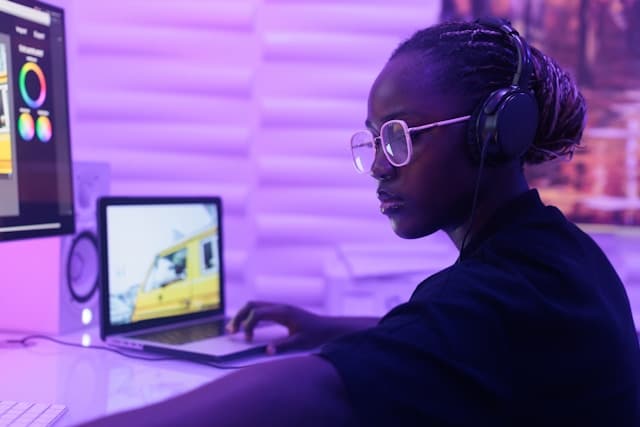
The following are step-by-step guides to becoming a voiceover artist with little or no experience;
- Improve Your Speaking Skills
- Listen to Professional Voiceover Artists
- Learn Basic Voice Acting
- Set Up a Simple Home Recording Space
- Learn Audio Recording and Editing
- Create a Voiceover Demo Reel
- Practice with Sample Scripts
- Build an Online Portfolio
- Find Your First Clients
- Keep Learning and Improving
1. Improve Your Speaking Skills
Voiceover is the skill of using your voice to communicate a message, usually a call to action, an infomercial, or a commercial promoting a product.
Because the skill is all about using your voice, you must first learn how to refine the way you speak. I am not talking about using a fake phonetic while speaking.
Improving your speaking is about learning to speak with clarity and confidence and communicate naturally.
Your main focus would be on your pronunciation, articulation, breathing control, voice projection, and emotional delivery.
Some of the best ways to practice are to read newspapers aloud, narrate short stories, record yourself daily, and speak clearly without rushing.
The more you practice, the more comfortable you’ll become behind the microphone.
2. Listen to Professional Voiceover Artists
One of the best ways to learn as a beginner is to listen to a professional voiceover artist. As you listen to various voiceovers of different categories, you will begin to learn some skills subconsciously.
One of the best ways to learn any creative skill is to copy like a creator. You listen to a voiceover, replicate, then add a little mix of your own.
As you listen to these professionals, study how they use pauses, emphasis, pitch, tone, and emotion.
Also, ensure you pay attention to the following voiceover formats;
- Television commercials
- Radio adverts
- Documentary narrations
- Audiobooks
- Brand promotional videos
3. Learn Basic Voice Acting
Learning the basics of voice acting is a practical step involving the core principles of the skill.
At this stage, you will get the revelation that voiceover is not about reading a script but acting with your voice, just like screen actors use their body, voice and emotion.
Practice expressing emotions such as:
- Excitement
- Sadness
- Confidence
- Curiosity
- Warmth
- Urgency
A good voiceover artist helps listeners visualise the story.
4. Set Up a Simple Home Recording Space
As a voiceover artist, you need a space suitable for recording crisp, clear audio. The good news is that you don’t need an expensive studio like the ones you see on Instagram or LinkedIn to get started.
One of our voiceover artists here at Arraya Studios once shared on LinkedIn how she used a duvet to record quality voiceovers before setting up her studio space.
A basic setup may include:
- A USB microphone
- Closed-back headphones
- A pop filter
- A microphone stand
- A quiet room with minimal echo
You can reduce echo by recording in a room with curtains, carpets, cushions, or acoustic foam.
5. Learn Audio Recording and Editing
Learning audio recording and editing is an essential skill for a voiceover artist. It is one thing to know how to do voice acting, and the technicalities of microphone settings and editing.
As a beginner, you won’t be able to afford the services of a professional recording studio that would do post-production on your recorded audio.
It is why you must know how to edit your own voice to deliver quality voiceovers to your clients.
Learn how to:
- Remove background noise
- Adjust volume levels
- Cut mistakes
- Export audio in different formats
Some of the popular software you can use for audio editing includes:
- Audacity
- Adobe Audition
- Reaper
Basic editing skills can make your recordings sound far more professional.
6. Create a Voiceover Demo Reel
A demo reel is your voiceover portfolio that potential clients and collaborators can see to determine the quality of your work.
As a voiceover artist, people are not only interested in what you say you can do, but they also want to hear what you have done.
You must have a demo reel of 60 and 90 seconds that includes different styles, such as:
- Commercial advertisement
- Documentary narration
- Corporate presentation
- Audiobook reading
- Energetic promotional script
Your demo is often the first thing potential clients will listen to as a requirement to determine if they want to hire you.
7. Practice with Sample Scripts
Practising with sample scripts, especially when you don’t have a job at hand, is a good strategy to hone your skills.
Write or download practice scripts and record yourself regularly, which will comprise your demo reels.
Try different categories like:
- Banking advertisements
- Food commercials
- Travel promotions
- Children’s stories
- Educational content
The more scripts you record, the more versatile your voice becomes.
8. Build an Online Portfolio
An online portfolio is necessary for every voiceover artist, especially now, where people land local and international clients through social media.
Create a simple online presence where clients can hear your work. The best strategy is to build your personality around your business.
People want to see the behind-the-scenes process of your work, as it gives you more credibility.
Also, you could start creating content sharing your experience, mistakes, learning process, and recommendations for clients and those who would like to become a voiceover artist.
You can use:
- A personal website
- YouTube
- TikTok
Upload short samples consistently to showcase your range and professionalism.
9. Find Your First Clients
As a voiceover artist, you have to be proactive and seek out opportunities, especially when you’re at a stage where you don’t have recurring customers.
Once you have a demo reel, start applying for voiceover opportunities.
Potential clients include:
- Advertising agencies
- Video production companies
- Radio stations
- YouTubers
- Podcasters
- Corporate organizations
- Animation studios
- E-learning companies
Networking with filmmakers and video editors can also lead to regular work.
10. Keep Learning and Improving
Voiceover is a skill that improves with consistent practice. Ensure you keep enhancing your skills to attract higher-paying clients.
Continue to:
- Read daily
- Learn new accents (if needed)
- Improve breathing techniques
- Study successful voice artists
- Upgrade your recording equipment over time
The more experience you gain, the more valuable your services become.
How Much Can Voiceover Artists Earn in Nigeria?
Your income depends on your experience, the type of project, and the client.
Typical rates include:
| Project Type | Typical Rate (₦) |
|---|---|
| Short social media advert | ₦10,500 – ₦28,800 |
| Radio commercial | ₦18,700 – ₦62,500 |
| Corporate video | ₦35,400 – ₦120,800 |
| Documentary narration | ₦55,600 – ₦185,400 |
| Audiobook (per finished hour) | ₦80,500 – ₦260,900 |
As your portfolio grows, you can charge significantly more, especially for national campaigns and international clients.
Conclusion
Becoming a voiceover artist in Nigeria doesn’t require years of experience; it requires consistent practice, a willingness to learn, and the confidence to put your voice out into the world.
Start with simple equipment, build a strong demo reel, and continue improving your delivery with every project.
Over time, you’ll develop both the skills and the portfolio needed to attract higher-paying clients.
At Arraya Studios, we regularly work with voice talents on commercials, documentaries, corporate videos, and digital content.
If you’re looking to build your portfolio, collaborate on creative projects, or learn more about the production side of voiceover work, connecting with an active production studio can be a great place to start your journey.