

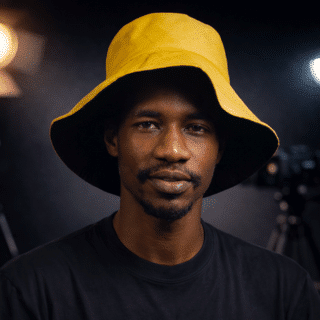
Becoming a professional cinematographer without prior experience or transitioning from a videographer is now more possible than ever, all thanks to the sophistication of our smartphone cameras.
Cinematography is a key creative aspect of filmmaking that involves the art of using the camera to tell a story that evokes emotion and engages the audience.
A cinematographer, also referred to as the Director of Photography (DOP), is responsible for shaping how a story looks, feels, and emotionally connects with the audience.
Many successful cinematographers began with zero experience, learning through practice, curiosity, and collaboration. In this article, I will guide you through the steps to take to become a Director of Photography.
Table of contents
Who Is a Cinematographer?

A cinematographer is a professional who understands the vision of a creative concept in film and captures the required image on camera.
Unlike videographers, directors of photography capture every frame with their camera with the intent of telling a story. A cinematographer will review the script, make decisions about the camera movement and angles.
Contrary to popular misconceptions, being a cinematographer does not require carrying large camera rigs on a movie set. With your phone camera, you can become a cinematographer if you learn the basics of the profession.
Cinematographers don’t only work on movie sets, but they also offer their services in music videos, commercials, corporate videos, events and weddings, documentaries, etc.
Job Description
The following are the job descriptions of a cinematographer;
- Camera angles and movement
- Lighting design
- Shot composition
- Lens selection
- Colour and visual tone
- Working with the director to bring the story to life
How to Become a Cinematographer

The following are practical steps you can take to become a cinematographer;
- Start With What You Have
- Learn the Basics of Cinematography
- Study Films Like a Cinematographer
- Practice Lighting
- Start Shooting Small Projects
- Build a Strong Portfolio
- Collaborate With Others
- Learn Basic Camera Gear
- Learn Colour Grading
1. Start With What You Have
Starting your cinematography journey with the tools at your disposal is the best pathway to becoming a professional.
As I stated earlier, you don’t need fancy gear to be a director of photography. You can learn the skill by using your phone camera to shoot videos.
One mistake I made earlier in my career as a cinematographer was having the mindset that I needed all the gear I saw on YouTube tutorials on cinematography, only to find out the YouTubers were promoting their affiliate links. I bought a gimbal, but trust me, I now prefer handheld shots.
You don’t need a cinema camera to learn cinematography. Your phone can help you with learning the following necessary skills;
- Framing
- Camera movement
- Exposure
- Natural lighting
- Storytelling
Always remember your early films don’t need to be perfect; they just need to exist.
Keep practising, as consistency makes you better. You need to train your eyes to see and your mind to think like a cinematographer.
- Shoot morning and evening light
- Practice close-ups and wide shots
- Recreate movie scenes with your phone
- Film your environment like a documentary
Practising all of these with your mobile phone will take you closer to becoming a director of photography.
2. Learn the Basics of Cinematography
Learning the basics of cinematography using free tools online, like YouTube tutorials, is what you need to become a professional.
Using YouTube to learn is easy because the algorithm will notice you’re learning about filmmaking and begin to recommend related videos on your feed.
For now, you need to focus on learning about the following;
- The rule of thirds
- Shot types (CU, MCU, LS, OTS, Tracking, etc.)
- Three-point lighting
- Depth of field
- Using shadows
- Composition styles
- Camera movement techniques
Learning all of these skills on YouTube is not enough; you’ll have to practice to become proficient.
3. Study Films Like a Cinematographer
An excellent method of learning to become a filmmaker is by watching films, especially from the early 2000s and 1990s.
At film schools, students study movies as part of their curriculum. These films contain all the cinematic principles you need to learn.
Before now, I used to watch movies for entertainment, but since I got into filmmaking, I analyse every scene. I am constantly trying to answer the following questions;
- Why did they choose this angle?
- How is the light hitting the actor?
- Why is this shot handheld, and the next one static?
- How does colour help the mood?
Movie Recommendations
Here are a few films I recommend to get started with learning cinematography;
- Blade Runner 2049 (2017)
- 1917 (2019)
- The Revenant (2015)
- Children of Men (2006)
- Moonlight (2016)
- In the Mood for Love (2000)
- Roma (2018)
- Dunkirk (2017)
- Her (2013)
- Parasite (2019)
- Pulp Fiction (1994)
4. Practice Lighting
Practising lighting is necessary because cinematography is composed of composition and lighting. Every good cinematographer must learn how to manipulate light to give the desired mood.
Lighting is a challenging aspect of cinematography, but learning the skill will put you ahead of other professionals.
My favourite YouTube channel for learning lighting is Rob Ellis. You can watch his tutorials here to learning the different aspects of lightning.
You can practice lighting using household items like lamps, window light, reflective surfaces, flashlights, LED bulbs, and a simple ring light.
With these items, learn to;
- Create soft and hard light
- Shape light with curtains or cardboard
- Bounce light off white walls
- Use shadows creatively
If you master lighting, filmmakers will want to work with you.
5. Start Shooting Small Projects
After learning the basics of cinematography, the next step is to practice by handling small projects.
Like I said earlier, if you watch all the YouTube tutorials, you won’t learn until you get your hands dirty by doing the practical work.
Here is a list of projects you can start handling as a beginner;
- Short films
- Skits
- YouTube videos
- Music videos for friends
- Church or school events
- Interviews
- Behind-the-scenes videos
Every project teaches you something new, and it is the best way to learn.
6. Build a Strong Portfolio
As a beginner cinematographer, you need to start building to strong portfolio to enable you to get hired.
A cinematography portfolio is a showreel of the works you have done, serving as evidence that you can be hired to deliver a similar job.
Your portfolio is more important than your gear, as it is what potential clients see that gives them the confidence to hire you.
You can upload your portfolio videos to YouTube, Google Drive, or your website. It should include the following;
- 30–60 second cinematography reels
- Music video clips
- Short scenes
- Creative lighting experiments
- Product shots
- Documentary-style clips
In case you’re wondering how you can build a strong portfolio, you can always volunteer to shoot people or events for free.
In your portfolio, you should show your eye, not your equipment.
7. Collaborate With Others
Collaboration is the key to becoming a successful cinematographer. The creative and film industry is teamwork. There are a lot you cannot achieve if you decide to work in isolation without connecting with other professionals.
If you go the route of a jack of all trades, you will remain stagnant in terms of your skills and clientele. You need to connect and work with directors, editors, colourists, makeup artists and other cinematographers.
Sometimes, you may even have to offer your services free of charge in the form of collaboration. Trust me, the people you work with will always recommend you for paying gigs. Also, Collaboration exposes you to different styles and helps you grow faster.
Join filmmaking communities, attend film festivals, and attend local film meetups and workshops.
8. Learn Basic Camera Gear
As you advance as a cinematographer, you will begin to get access to industry-standard gear. At this point, you will need to learn the basics of mirrorless or cinema cameras, lenses, ND filters, gimbals, and lighting kits.
Don’t start with expensive gear; start with what you can learn from. The good thing is that as you collaborate with more professionals in the industry, you get the opportunity to handle expensive gear.
9. Learn Colour Grading
As a cinematographer is advisable that you learn colour grading. You don’t necessarily need to be a professional at colour grading, but the skill will come in handy as you advance in your career.
Colour grading makes your footage look cinematic. Davinci Resolve is the best colour grading tool you can use to learn basic adjustments: exposure, contrast, shadows, highlights, and skin tone balancing.
Good colour grading can turn average footage into stunning cinema.
Conclusion
Becoming a cinematographer with no experience is absolutely possible if you stay curious, practice consistently, and build your visual storytelling skills. Start small, study great films, collaborate with creatives, and keep refining your eye for light and movement.
Over time, you’ll gain the confidence and skill to handle bigger projects and work professionally in the industry.
And if you want to grow even faster, Arraya Studios is here to support your journey.
Whether you need mentorship, hands-on production experience, or opportunities to practice on real projects, Arraya Studios works with upcoming and professional cinematographers.
Start your cinematography journey the right way. Work with Arraya Studios today.
